
NVIDIA PAIR 1.0 Routes Local Agents Across Home PCs and Finally Speaks llama.cpp
NVIDIA Personal AI Router left beta as v1.0.0 on October 13, 2026, adding managed llama.cpp, Hugging Face GGUF downloads, RTX Spark validation, and Apache-2.0 multi-machine routing for OpenAI-, Ollama- and Anthropic-compatible clients.
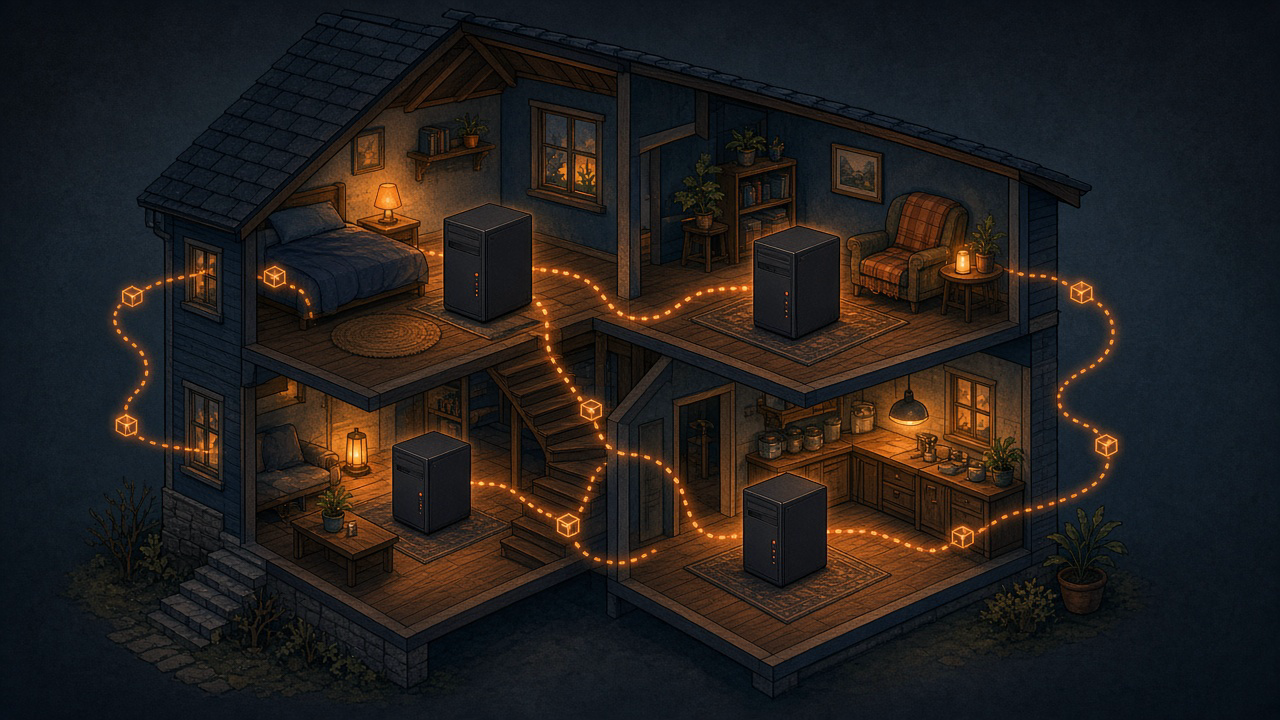
NVIDIA Personal AI Router left beta on October 13, 2026 with a v1.0.0 GitHub release that adds managed llama.cpp, Hugging Face GGUF downloads and RTX Spark support. The project lives at NVIDIA/Personal-AI-Router under Apache-2.0. At publication time the repository held more than 1,600 stars. NVIDIA’s RTX Spark software blog the same day framed PAIR as free, open-source software that discovers compatible PCs on a local network and spreads independent inference jobs across them—on Windows, Linux and macOS.
PAIR is a router, not a cluster fabric. The README is explicit: each independent request goes to one eligible node. It does not pool GPU memory, shard a single model across machines, or split one in-flight generation. What it does is discover nodes, install and manage supported engines, present local proxy endpoints, and choose a machine based on engine availability, model presence and current load. Prompts and responses are intended to stay on the LAN when every client, model source, engine and node is local.
What 1.0.0 actually ships
The release notes call out four product changes. First, llama.cpp support: PAIR can install and manage llama.cpp, pull compatible GGUF models from Hugging Face, and route requests to those engines the same way it already treated Ollama and LM Studio. Second, engine launch options let operators customize arguments and environment variables—context size among them—on this device or a paired one. Third, RTX Spark support validates the Windows on ARM build with llama.cpp and CUDA on Spark N1X hardware ahead of laptop availability. Fourth, the terminal interface is reorganized around each device, with a Jobs tab that follows inference across paired machines for headless boxes.
Compatibility notes matter for anyone upgrading from beta. Local endpoints now honor each engine’s CORS policy instead of allowing every browser origin, so browser clients may need engine-side origin allowlists such as OLLAMA_ORIGINS. The macOS app renames to NVIDIA PAIR.app and installs beside older PAIR.app builds, so users should remove the legacy app. Engines installed by earlier PAIR builds that kept no install record are no longer auto-removed on reset; models themselves stay in the engine’s usual directories after uninstall.
Who this is for in a local-agent week
The timing is deliberate. NVIDIA’s October 13 ecosystem post ties PAIR’s graduation to RTX Spark laptops (launching October 16), agent apps such as Hermes, OpenClaw, Pi and GitHub Copilot, and the broader pitch that local LLM downloads are already five times higher than all of last year. PAIR’s practical niche is households and small labs that already own more than one machine: a gaming desktop with a large GPU, a laptop for daytime work, maybe a Linux box left on overnight. Concurrent multi-agent workloads—several Hermes or OpenClaw sessions at once—can land on whichever node currently holds the model and has headroom.
Supported engines at 1.0 are Ollama, LM Studio and llama.cpp. PAIR itself runs on Windows 11, Linux and macOS at x64 and arm64, with Windows on ARM still labeled experimental. Installers cover Windows .exe, Linux .deb and macOS .dmg; other Linux distributions build from source. Mixing operating systems in one pair set is allowed. A running PAIR instance does not guarantee every engine will start on every node—GPU drivers and memory still belong to the engine and the model.
Proxy shapes and community pace
PAIR presents Ollama-compatible, OpenAI-compatible and Anthropic Messages API endpoints so existing agent harnesses can point at localhost without rewriting providers. Community contributions already landed Anthropic Messages routing through Ollama and LM Studio in the 1.0 window, matching NVIDIA’s note that the project took more than ten community features and fixes within a month of the initial public release.
The product boundary is worth repeating for readers coming from model-sharding headlines. If you need one 70B-class model striped across two GPUs in two chassis, PAIR is the wrong tool. If you need three coding agents to stop fighting over a single Ollama instance while a second PC sits idle with the same GGUF cached, 1.0.0 is aimed at that queue. Apache-2.0 licensing, signed installers and a public contribution workflow make it closer to infrastructure people can audit than to a closed companion app.
For local-agent operators, the headline is simple: NVIDIA’s personal router is out of beta, llama.cpp is a first-class managed engine, and Hugging Face GGUFs can be pulled without leaving the PAIR UI. Wire the proxy into Hermes, OpenClaw or Pi, keep traffic on the LAN, and treat multi-machine routing as load balancing for independent requests—not as a substitute for real model parallelism.
- #NVIDIA PAIR
- #llama.cpp
- #Local Agents
- #Open Source
- #RTX Spark

Author
Raj M
Contributor
AI Systems Architect is a seasoned technology leader with over 15 years of experience in the IT industry working with Fortune 500 companies. With a solid foundation in multi-agent systems, open-source LLM infrastructure, and enterprise deployment, he excels at building scalable production-grade AI platforms.