
OpenClaw Enterprise Adds Multi-Tenant Governance for Persistent Agents Ahead of 1.0
On September 29, 2026, the OpenClaw Foundation announced OpenClaw Enterprise—an open-source, vendor-neutral control plane for persistent agents with multi-tenancy, hard security boundaries, and swappable harness, model, and sandbox primitives.
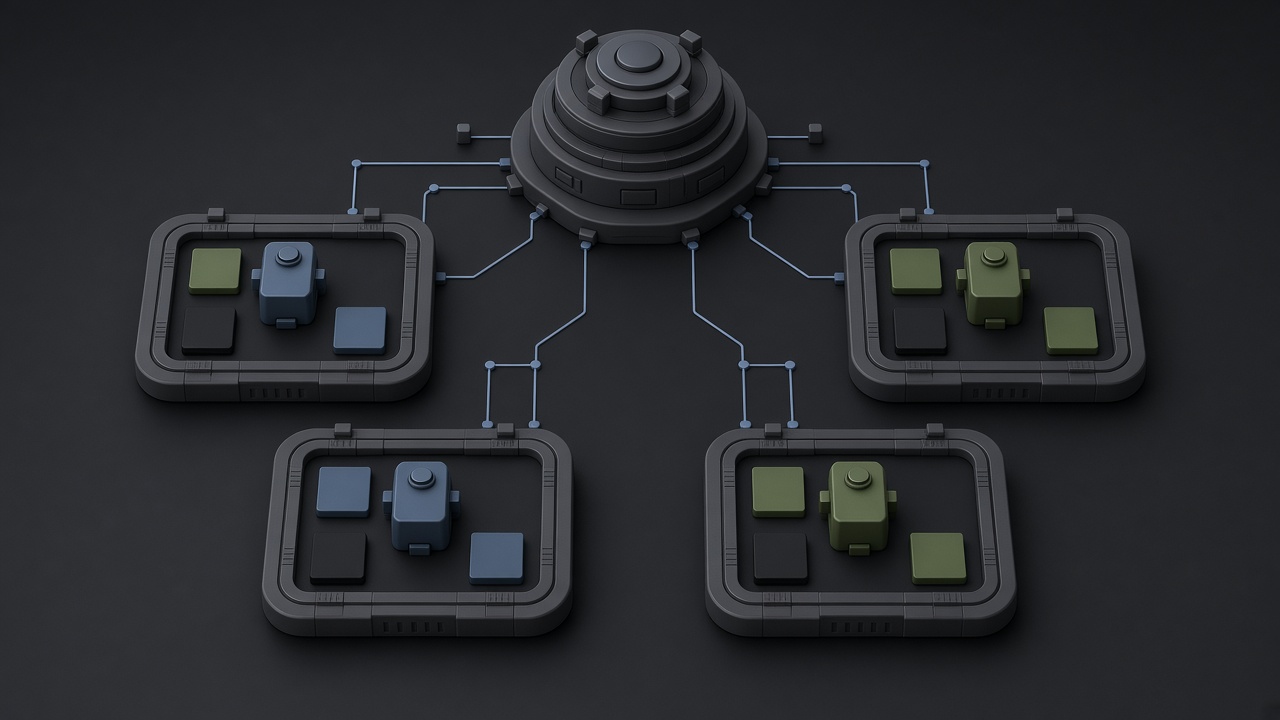
The OpenClaw Foundation announced OpenClaw Enterprise (OCE) on September 29, 2026, as an open-source, vendor-neutral platform for managing persistent agents in sensitive environments—built in the open before a planned 1.0 later this year. The company blog post frames a blunt enterprise reality: almost a year after OpenClaw showed what a strong model plus an agentic harness can do, many IT organizations still default to banning agent platforms because security, safety, and governance standards feel unfinished. OCE’s job is to deploy powerful agents without “nerfing” their capabilities behind a control plane teams can actually run.
OCE is described as an enterprise-grade control plane layered on OpenClaw’s foundation. The post emphasizes multi-tenancy, hard security boundaries, and standardized agentic primitives, plus governance and auditability across the agent lifecycle. Critically, core pieces—the harness, the model, and the sandbox—are designed to be swappable for third-party or internal implementations, so the control plane does not lock an organization into one stack. That vendor-neutral stance is part of the Foundation’s pitch: OCE is meant to run on an organization’s own infrastructure and remain free for any organization to use.
Maturity is stated carefully. The Foundation says OCE is something organizations can use today for internal pilot workloads, not a finished enterprise product. Open-sourcing early is intentional: co-develop with the community ahead of 1.0. Operators can self-host by cloning the repository and following the getting-started guide, run locally with docker-compose for development, and deploy internally on Kubernetes. Those are the deployment paths named in the announcement. The openclaw/openclaw-enterprise repository ships under the MIT License; the blog post still omits a full feature matrix, so teams should verify the security model before production use.
Provenance matters for trust. Development started at OpenAI, was donated to the OpenClaw Foundation as an independent project, and has continued in collaboration with Red Hat and NVIDIA. The Foundation says OCE is being piloted internally at companies including Red Hat and OpenAI, and that OpenAI is already running OpenClaw agents with full access to codebases and plugins. A quoted note from OpenAI staff member RJ Marsan describes an internal enterprise agent (“Androidclaw”) triaging channels, finding pull requests for broken builds, answering obscure product questions with SEV links, and publishing fixes with video evidence—illustrating the persistent, context-rich workload OCE aims to govern rather than a one-shot chatbot session.
Security is named as the primary focus. OCE combines hard boundaries between trusted and untrusted workloads with sandboxing, LLM-based reviews, and fine-grained permissions. A reference architecture showing how those protections work together is promised in the coming weeks rather than shipped in the announcement itself. That sequencing is useful for readers: the September 29 post is a control-plane and governance launch, not a CVE write-up or a finished hardening cookbook. For teams that already follow NVIDIA’s OpenShell and related agent-runtime work, OCE sits one layer up—the multi-tenant management and lifecycle plane—while leaving room for external sandboxes and models.
The Foundation’s closing invitation is aimed at developers, operators, security teams, and organizations that want an open foundation for enterprise agents rather than another closed agent SaaS. Early status means rough edges: pilot-first wording, deferred reference architecture, and a 1.0 still ahead. The strategic claim is still clear—persistent agents need shared security and governance primitives before they clear enterprise IT bans—and OCE is the Foundation’s open bid to supply them.
For Writeble’s ai-agents desk, OpenClaw Enterprise is the September 29 signal that open agent stacks are moving from demos to multi-tenant control planes—with the caveat that 1.0 and the full security reference design are still on the roadmap.
- #AI Agents
- #Open Source
- #Enterprise AI
- #Agent Governance
- #OpenClaw

Author
Raj M
Contributor
AI Systems Architect is a seasoned technology leader with over 15 years of experience in the IT industry working with Fortune 500 companies. With a solid foundation in multi-agent systems, open-source LLM infrastructure, and enterprise deployment, he excels at building scalable production-grade AI platforms.