
n8n Agents Sit Beside Workflows With Sessions, Channels, and Tool Approvals
On September 25, 2026, n8n introduced first-class Agents—preview assistants with models, instructions, workflow tools, channels, memory, and approvals that run beside existing automations on Cloud and self-hosted 2.32.3+.
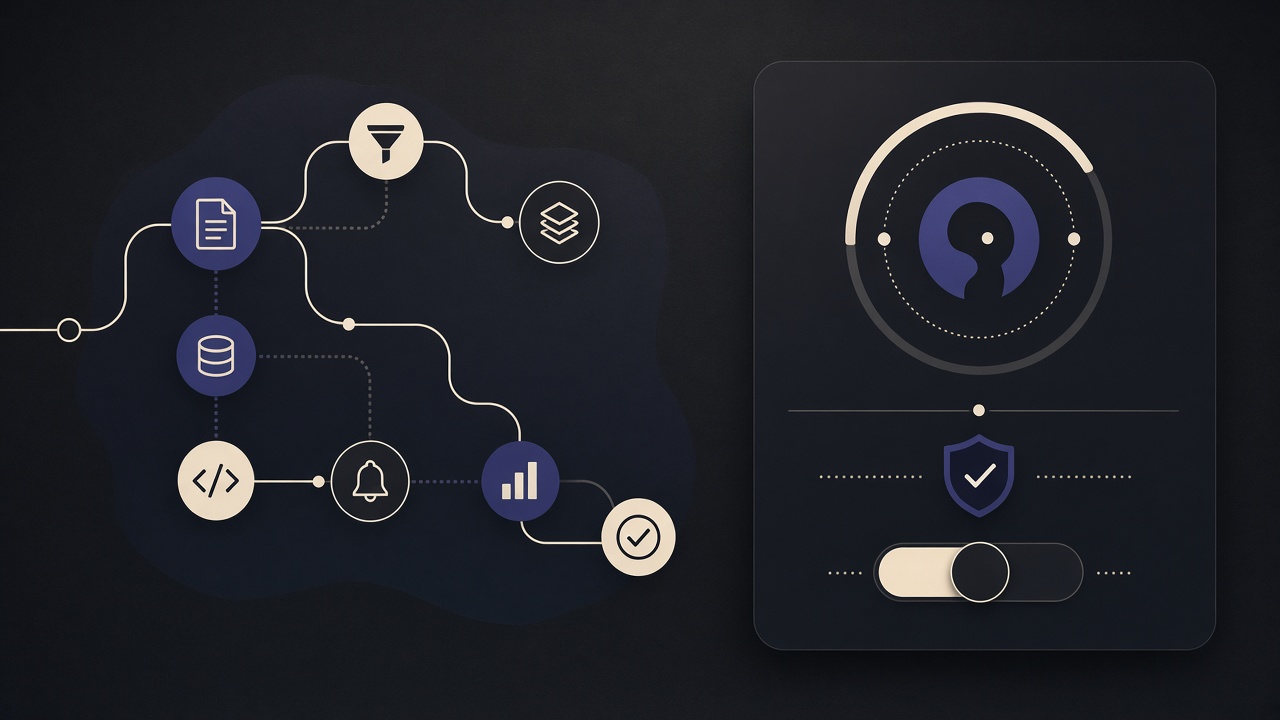
n8n published “Introducing n8n Agents” on September 25, 2026, adding a first-class Agent artifact that sits next to workflows instead of forcing open-ended work into a fixed canvas. Users describe what the agent should do, attach a model plus tools and workflows it may call, then reach the same published agent from Slack, Telegram, Linear, a schedule, or a Message an Agent node inside another workflow. The older AI Agent node and existing chat-trigger builds keep working unchanged. Product and docs both mark Agents as preview software: available to everyone on n8n Cloud on the latest stable release, runnable on self-hosted from version 2.32.3 with extra setup, and not yet ready for self-hosted Enterprise.
n8n’s framing is practical rather than academic. Fixed workflows still fit lead enrichment, scoring, and routing where the sequence is known. Agents target jobs where the next step depends on the last answer—support tickets that need account context, Slack questions about usage drops, inbound GitHub issues, or other domain-bounded requests that change every time. Memory, sessions, channels, versions, and approvals ship with every agent so builders spend time on instructions and tool scope instead of reassembling those primitives around an AI Agent node. Draft and published versions are separate: teams edit a draft, preview it, then publish a snapshot while production keeps the previous published revision until the next publish, restore, or unpublish.
The tool model is the sharpest product cut. An agent can use MCP servers (all tools from a connected service, with exclusions), n8n integrations configured for one specific action, and whole workflows that already encode a boring, correct process. The blog’s support example is concrete: workflows for get-account-context, add-a-note, and page-on-call stay step-fixed, while the agent decides when to call them. That split keeps CRM write credentials inside the note-writing workflow rather than in the agent’s prompt surface. Sensitive tools can require Approve/Reject before execution; each tool runs under the credential attached to it; access to edit and publish the agent follows n8n roles. One agent turn counts as one execution, tool calls to workflows and sub-agents do not bill separately, and agents share the workflow execution quota.
Docs expand the builder surface beyond the launch blog. Agents include skills (reusable instruction-plus-tool bundles), sub-agents, optional web search (native model search or Brave/SearXNG fallbacks), knowledge uploads on Cloud (csv, pdf, markdown, txt; self-hosted knowledge needs a Daytona sandbox and remains preview), session memory by default, and optional episodic memory that needs an OpenAI credential. Channels and schedules attach after publish. Instance-level MCP can manage agents from external MCP clients after reconnecting for the new permissions. Self-hosted setup enables the agents module via N8N_ENABLED_MODULES; the fuller Assistant-scaffolded experience needs instance-ai, and channel webhooks need a public WEBHOOK_URL. Queue mode is not supported for agents yet.
Operational caveats matter for readers who treat the announcement as production-ready. Preview behavior can change release by release; n8n tells operators to test before publishing and keep approvals on anything that writes to a system of record. Gateway credits can bootstrap a first conversation without a provider key, but bringing your own model credentials remains the durable path. Enterprise self-hosted support is explicitly “coming soon,” so large on-prem fleets should treat this as an evaluation window rather than a forced migration off the AI Agent node.
Getting started paths are deliberately low-friction on Cloud. Operators can open the Agents tab and create an agent manually, or describe the job to n8n Assistant and receive drafted instructions, tools, and channels to refine. The launch post suggests practical first builds: an internal Slack bot wired to one or two systems the team already asks about, a support agent that drafts replies after pulling account context, a research agent that summarizes inbound leads, a Linear agent that recommends follow-ups on new issues, or a scheduled morning summary of overnight changes. Because draft and published versions are separate, those experiments can stay in preview chat until a publish snapshot is intentional.
For Writeble’s ai-agents desk, n8n Agents is the late-September automation-platform drop that makes the agent a published, channel-reachable object with workflow-scoped blast radius—complementary to harness SDKs that only swap coding-agent loops.
- #AI Agents
- #n8n
- #Workflow Automation
- #Developer Tools

Author
Raj M
Contributor
AI Systems Architect is a seasoned technology leader with over 15 years of experience in the IT industry working with Fortune 500 companies. With a solid foundation in multi-agent systems, open-source LLM infrastructure, and enterprise deployment, he excels at building scalable production-grade AI platforms.