
Google Open-Sources Mantis Agentic Harness to Find, Reproduce, and Patch Vulnerabilities
Google released Mantis, an open-source skill suite that helps coding agents discover, triage, sandbox-reproduce, and patch software bugs, targeting hallucinated findings and true-positive rates under 7% in naive AI code scanning.
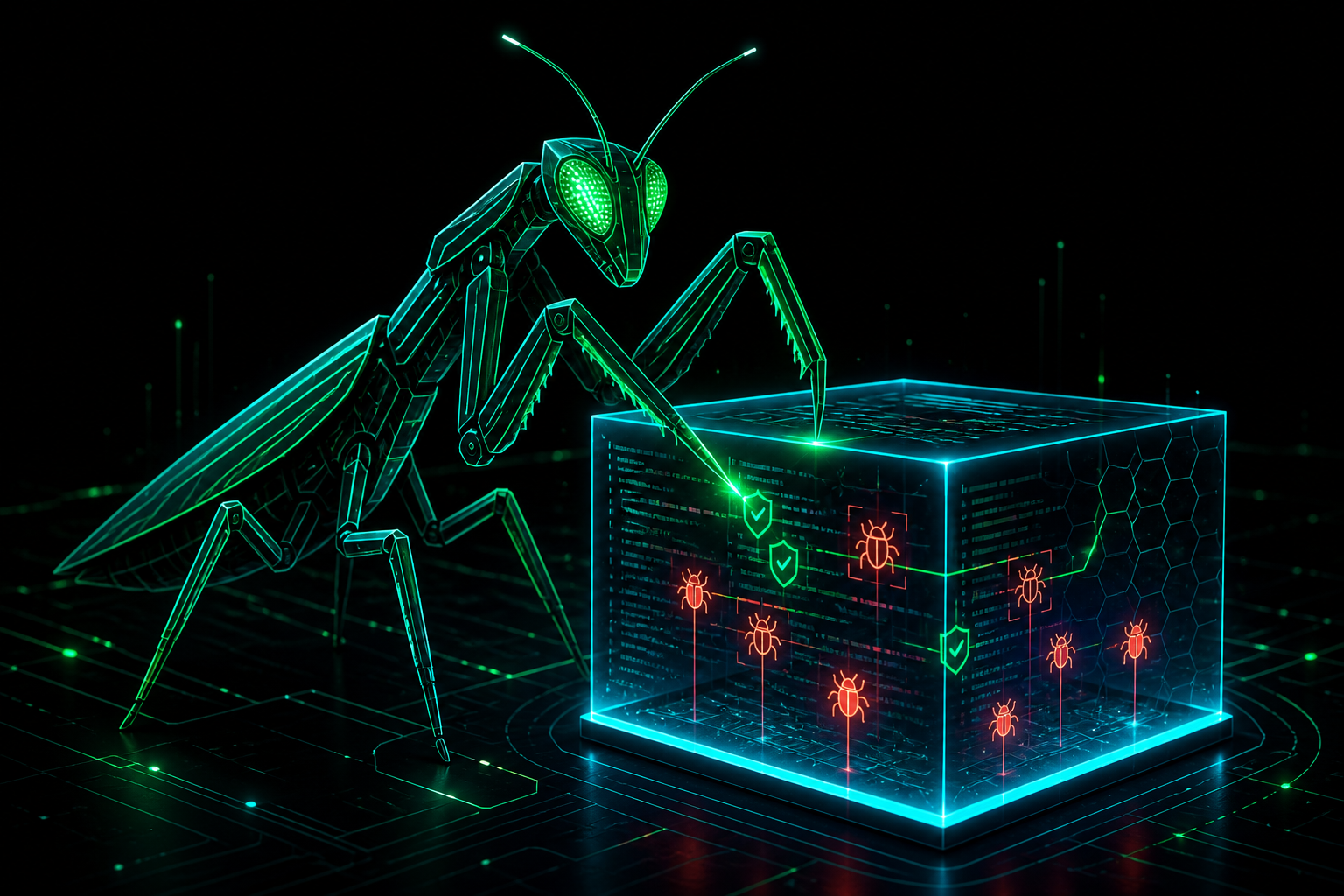
Google open-sourced Mantis, an agentic security harness that automates discovery, triage, sandboxed reproduction, and patching of software vulnerabilities. A Google Cloud Blog post dated September 2, 2026 introduces the project as part of Google’s internal machine-speed find-and-fix approach, and InfoQ covered the release on September 6. The code lives at github.com/google/mantis.
Google’s post says conventional AI code scanning often hallucinates bugs and posts weak true-positive rates under 7%. Mantis pairs critic and review agents with sandboxed reproduction so findings are grounded in evidence rather than model judgment alone. The harness also studies repository history and past security fixes, then builds architectural and threat-model documentation when none is provided.
Hierarchical summaries and staged skills
To keep large repositories tractable, Mantis builds a hierarchical security summary tree that condenses files into directory- and repository-level context. Google reports that technique cut token overhead by over 85% while preserving structural context. InfoQ describes a modular skill suite with more than 15 stages that read and write shared on-disk state, including summarization, architecture, threat modeling, planning, research, dedupe, review, critic, reproduce, chain, patch, calibrate, reflect, and report steps.
The public README presents Mantis as stack-agnostic skills for coding agents rather than a single fixed product. Install paths include cloning the repo or npx skills add google/mantis. Google’s blog suggests prompting a coding agent with the local Mantis path and a target codebase; the same prompt pattern, Google says, has been used internally to find real vulnerabilities. README guidance stresses isolated environments, human verification of findings, and caution against mass-filing unverified AI reports to open-source maintainers.
Model tiering and false-positive filters
Google recommends matching model class to stage: lighter “flash” or “lite” models for rapid classification and dedupe, and stronger models for mantis-reproduce crash reproducers and mantis-patch side-effect-aware fixes. The mantis-review stage applies a rule-based negative filter for likely false positives, with an explicit warning that over-broad filtering can hide real low-risk bugs. A later mantis-advise skill is positioned to feed accumulated learnings back into secure-by-default coding agents.
Mantis is labeled “not an officially supported Google product” on GitHub and is intended as a starting point teams adapt to their stack. Primary sources for this brief are Google Cloud’s September 2 Mantis post, InfoQ’s September 6 write-up, and the google/mantis README and agent reference.
- #Cyber Security
- #AI Agents
- #Opensource

Author
Raj M
Contributor
AI Systems Architect is a seasoned technology leader with over 15 years of experience in the IT industry working with Fortune 500 companies. With a solid foundation in multi-agent systems, open-source LLM infrastructure, and enterprise deployment, he excels at building scalable production-grade AI platforms.