
Couchbase Releases AI Data Plane to Provide Persistent Agent Memory
Couchbase launched its AI Data Plane to serve as a unified, operational data foundation for enterprise AI agents. The new product provides persistent agent memory, a discoverable Agent Catalog, and an enterprise-supported, self-managed Model Context Protocol server. The architecture is designed to deliver low-latency, consistent context to agents at decision time, simplifying the transition of agentic workflows from pilot to production.
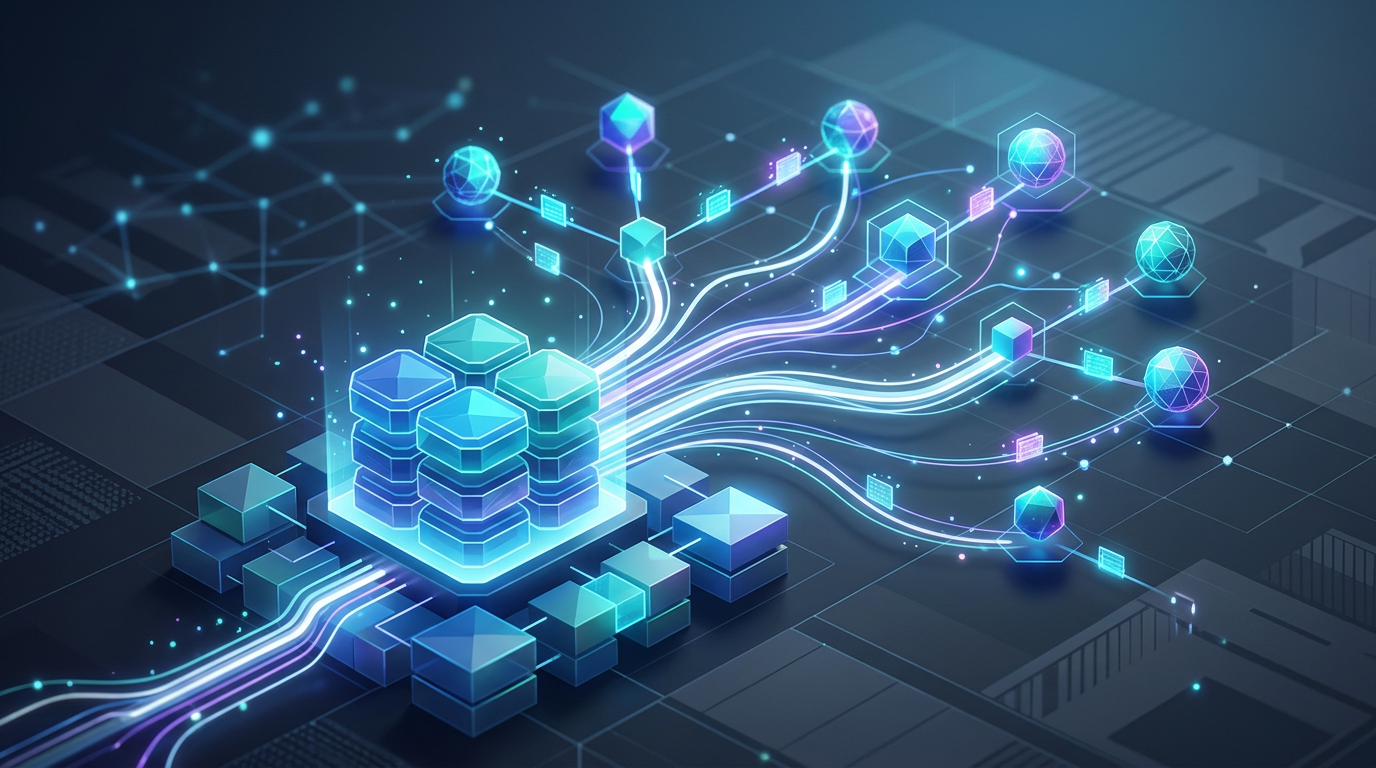
Couchbase has launched its AI Data Plane, a unified operational data infrastructure layer designed to serve as a persistent memory and integration foundation for enterprise AI agents. The release, announced on June 30, 2026, aims to solve the technical bottlenecks that prevent experimental AI pilots from transitioning into stable production environments.
The launch extends the capabilities of the database vendor’s platform across multiple environments. It is available as a fully managed service via Couchbase Capella and as a self-managed solution within Couchbase Enterprise.
Standardizing Memory across Sessions and Orchestration Frameworks
At the core of the new release is Agent Memory, a unified persistence layer designed to maintain short- and long-term context. Historically, developers building AI agents have had to stitch together disparate caching systems, vector databases, and document stores to help an agent remember past interactions. This fragmented architecture often requires agents to repeatedly ask users for context, or causes them to exhaust their context windows.
The AI Data Plane collapses these separate database types—vectors, documents, cache, and operational data—into a single operational layer. According to Tim Finley, senior vice president for AI at Couchbase, providing a dedicated, unified persistence layer reduces the volume of data that must be packed into an agent’s context window, ultimately lowering the number of tokens consumed during reasoning tasks.
+-------------------------------------------------------------+
|                  COUCHBASE AI DATA PLANE                    |
+-------------------------------------------------------------+
|  [Agent Memory]       [Agent Catalog]       [MCP Server]    |
|  Short/long-term      Tool discovery &      Standardized    |
|  session persistence  prompt tracing        data access     |
+-------------------------------------------------------------+
|                 UNIFIED DATA FOUNDATION                     |
|         (Vectors, Documents, Cache, Operational)            |
+-------------------------------------------------------------+
To limit the computing and financial overhead of long-running sessions, the platform includes built-in operational guardrails. These include:
- Token constraints managed per session to limit model usage costs.
- Configurable time-to-live (TTL) limits on stored memories to automatically purge stale context.
- Metering controls designed to cap compute consumption per agent session.
The memory system is framework-agnostic and has been validated against major orchestration libraries, including LangGraph, CrewAI, and LlamaIndex. This compatibility allows engineering teams to switch or mix orchestration frameworks without rebuilding their underlying memory architecture.
Discoverability and Standardizing Model Integrations
The release also introduces two key components to assist with agent discovery and protocol standardization:
- Agent Catalog: A function-level repository of discoverable agent tooling built by Couchbase. It makes prompts, tool definitions, and end-to-end execution traces discoverable across developer teams. Engineers can use the catalog to inspect, reuse, and audit agent behaviors and decisions, querying trace data using SQL++.
- Model Context Protocol (MCP) Server: An enterprise-supported, self-managed server that implements the standardized Model Context Protocol. Rather than requiring developers to construct custom integration tiers for every unique data source, the MCP server provides agents with a standardized interface to query Couchbase documents, vectors, and operational caches.
Architectural Foundations from Cache to Lakehouse
Couchbase’s underlying architecture relies on a JSON-based format optimized to run in memory, delivering sub-millisecond latency at scale. Chief Technology Officer Gopi Duddi noted that writing to memory is up to 10 times faster than writing to disk. This speed advantage distinguishes Couchbase’s memory-first architecture from NoSQL databases that layer memory workloads on top of physical disk-based storage.
This high-speed operational data access is coupled with broader reach into enterprise lakehouse environments. Alongside the AI Data Plane, Couchbase updated its Enterprise Analytics 2.2 platform to support Apache Iceberg lakehouse federation. This capability allows enterprises to query external Iceberg tables in place without performing complex extract, transform, load (ETL) pipelines or duplicating data. The company also announced plans to release a dedicated Trino SQL query engine adapter in the third quarter of 2026 to expand distributed query options.
Edge Synchronicity and SDK Updates
The capabilities of the AI Data Plane extend down to disconnected and edge devices through updates to the Couchbase Lite embedded database.
Couchbase Lite 4.1 introduces peer-to-peer synchronization over Bluetooth. This feature allows mobile applications to synchronize operational data and update local agent memory in entirely disconnected, zero-network environments.
Developers also received several library updates to simplify mobile and backend integration:
- React Native SDK 1.1: Adds Turbo Module integration, allowing cross-platform mobile apps to bypass typical bridging overhead and directly access native database performance.
- Rust SDK: Provides async-native access to key-value stores, query engines, full-text search, and vector indexing.
- Couchbase Lite Android API: Now features native Kotlin serialization support to eliminate boilerplate data mapping.
- #AI Agents

Author
Krishnan
Contributor
Enterprise Technology Explorer is a business and operations professional with over 15 years of experience across multiple industries working with Fortune 500 companies. With a solid foundation in enterprise processes, digital adoption, and technology evaluation, he excels at bridging business needs with emerging technologies to build scalable enterprise-grade applications.